
 By
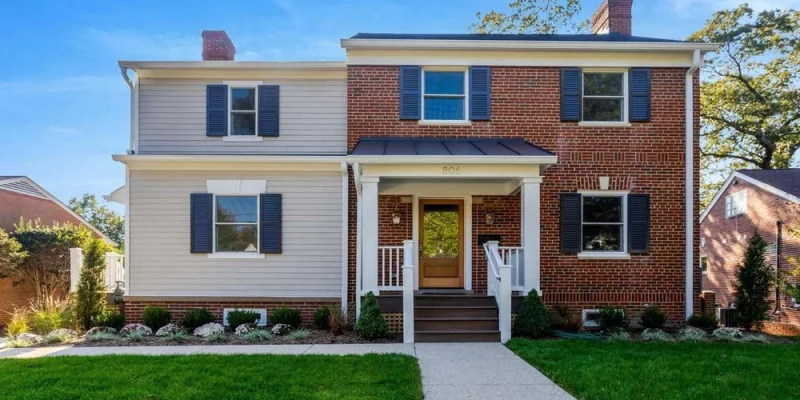
Drive the few miles from King Street out toward Cameron Station and you pass more than two centuries of roofing. There is slate and painted metal on brick rowhouses, steep gables over Del Ray bungalows, long gentle slopes on postwar ramblers, and whole rows of townhouse roofs that were shingled in the same month. Each of those roofs fails in its own particular way, and most owners only learn their house’s weak spot after a stain blooms on the ceiling.
Knowing what kind of house you live in turns out to be the shortest route to knowing what can go wrong overhead. A flat roof on an early 1800s rowhouse and a hip roof on a 1990s colonial share almost nothing besides the job of keeping rain out.
Since 2009, the crews at ASA&SONS have been handling roof services in Alexandria and the surrounding DMV, a run of more than a thousand projects that touches nearly every roofline the city has produced. Spend enough time on local roofs and a pattern emerges, which is that the style and age of the house predict the trouble far better than the color of the shingles.
Rowhouses That Keep Their Roofs Out of Sight
Old Town and Parker Gray are lined with attached brick houses whose roofs are flat or close to it, often tucked behind a parapet so you never see them from the sidewalk. Out of sight easily becomes out of mind. On a low slope, water doesn’t hurry off the way it does on a steep roof. It lingers, and anything that slows it down becomes a leak waiting to happen.
The original coverings were often standing seam metal or built up layers of tar and gravel. Many have since been swapped for modified bitumen or single ply membranes like EPDM and TPO. Whatever the material, the trouble concentrates in the same places. Seams open as the membrane ages, and the flashing where your roof meets a neighbor’s taller wall pulls loose as the two buildings move at slightly different rates. Leaves from street trees choke scuppers and internal drains, leaving shallow ponds that sit for days after a storm.
Rear ells deserve a second look as well. Many rowhouses have a lower addition at the back with its own small roof, and the joint where it ties into the main brick wall is a classic spot for slow, hard to trace leaks. Metal roofs in this part of town also need periodic repainting, since bare spots rust faster than most people expect.
Bungalows and Foursquares With Steep Character
Del Ray and Rosemont took shape in the early twentieth century, and their bungalows and foursquares wear steep roofs broken up by dormers, porch roofs and brick chimneys. Steep pitches shed water well, so the main field of shingles is rarely the problem. The details are.
Front porch roofs usually run at a much shallower angle than the house, and the place where that low slope meets the main wall collects water and debris. Chimneys from this era are frequently unlined, with mortar crowns that crack after decades of freezing and thawing, letting water into the masonry well before it shows up indoors. Dormers multiply the number of valleys and side walls that depend on careful step flashing.
A detail that surprises owners at tear off time is the decking itself. Older houses often have spaced plank sheathing underneath, laid back when wood shingles were the norm. Modern shingles need a solid deck, so a full replacement on one of these homes often includes new plywood, which belongs in any honest estimate from the start. Half story bedrooms tucked under the roof add one more wrinkle, because cramped kneewall spaces leave little room for ventilation and help ice dams form along the eaves.
Postwar Ramblers That Hide Their Age
Neighborhoods such as Beverly Hills and Seminary Hill filled up after the war with colonials, Cape Cods and single level ramblers. These roofs look simple, and that simplicity hides decades of history. Many have been reroofed two or three times, sometimes with a new layer nailed straight over the old, so the attic tells a more honest story than the curb does.
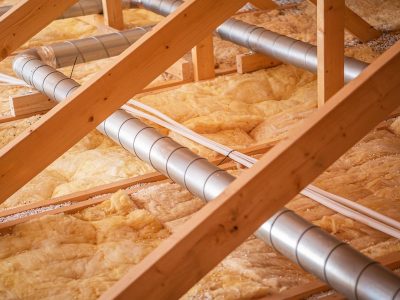
Low pitched ramblers drain more slowly than their steeper cousins, and wind driven rain can push under shingles at the eaves. Over the years, owners added sunrooms, family rooms and screened porches, often with flatter roofs tied awkwardly into the original. Skylights installed in the 1980s are now reaching the end of their seals. Inside the attic, a common quiet saboteur is a bathroom fan venting into the open space instead of outdoors, along with blown in insulation piled over the soffit vents, which together trap moisture and age the decking from below.
Townhouse Rows Bound Together
From the 1970s onward, Alexandria added thousands of townhouses, and newer communities like Cameron Station and Potomac Yard continue the trend. Here a roof is never entirely private. The firewalls between units, the step flashing where one home sits a foot taller than the next, and the seam left when one owner replaces and the neighbor doesn’t all affect both households.
Before any work begins on an attached home, a few matters are worth settling.
- Whether the roof is the owner’s responsibility or the association’s, which depends on how the property is organized.
- The approved shingle lines and colors, since many associations restrict both.
- Whether neighbors are planning their own replacement, because coordinating the work produces cleaner joints and often better pricing.
- Where the dumpster and materials can sit, given shared lots and tight parking.
- How the joint at each party wall will be finished and sealed.
The newest townhouses add a twist of their own. Many have low slope roofs with membrane coverings and rooftop terraces, so every railing post and deck support becomes a penetration that has to be sealed perfectly and inspected often.
Matching the Crew to the Roof
All of this points to a simple idea. A company that excels at asphalt shingles on colonials may have little experience with membranes over rowhouses or with slate repairs, so it is fair to ask how many roofs like yours a contractor has handled recently.
Licensing deserves the same attention. Virginia requires a state license for residential jobs of $1,000 or more, licensed contractors must provide a written contract, and the Department of Professional and Occupational Regulation keeps a public lookup. Its warning about unlicensed contractors after storms is worth reading before summer thunderstorm season, when door knockers tend to appear the morning after high winds. Full replacements also need a city permit, and a reputable roofer handles that paperwork rather than suggesting you skip it.
A roof is easier to care for once you see it as part of the house it sits on. The rowhouse needs clear drains and sound seams, the bungalow needs attention at its chimney and porch, the rambler needs someone to look under its layers, and the townhouse needs neighbors who talk to each other. Get those basics right and most roofs here will reach the far end of their expected life.
Comments