
 By
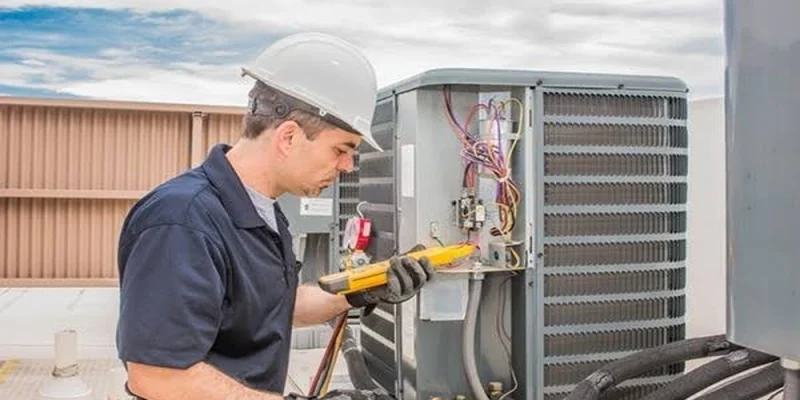
The estimate reads $1,400 to replace an inducer motor on a furnace that went in when flip phones were still cool. It is a fair price for the part and the labor. The harder question is whether that money buys five more winters or five more weeks.
Homeowners from Sandy to West Valley run into some version of this every year, usually on the coldest night in January or the first 98 degree afternoon in July. Panic makes the decision for many of them. A little groundwork done ahead of time makes it for the rest.
Plenty of calls for hvac service in Salt Lake County begin with exactly this dilemma, and the licensed crew at holmesfamilyhvac.com, based in Lehi and booking appointments at nearly any hour, sees it in Draper basements as often as anywhere along the Wasatch Front. Their technicians handle both sides of the choice, from furnace and AC repairs to full installations and seasonal tune ups, which is the kind of balance worth looking for in whoever you call.
Three Houses and Three Different Answers
The right call depends far more on the system than on the size of the bill, and a few typical situations show why.
The Sandy rambler with a tired furnace
A 22 year old furnace stops lighting. During the visit, the technician finds a crack in the heat exchanger. That crack can let combustion gases, including carbon monoxide, mix with the air moving through the house. Repairing a heat exchanger on equipment this old rarely makes financial sense, and running it as is would be a real safety risk. This one is a replacement, and the only open question is what kind.
The West Jordan two story with a dying compressor
The air conditioner dates to 2009. Its compressor has shorted out, and the coil has been topped off with refrigerant twice in recent summers. A new compressor would cost a large share of a new system. It would also go into equipment with a slow leak and a coil near the end of its life. Most technicians would talk this owner toward replacement too, though the furnace beside it might have years left.
The Draper build that just needs a part
A 2016 furnace short cycles and shuts down after a minute or two. The culprit turns out to be a dirty flame sensor, a fix that costs less than a nice dinner out. Replacing this system would be pure waste. The smarter move is a yearly tune up so the same sensor does not coat over again.
The Math That Settles Most Cases
Two rough rules help when the answer is not obvious. The first multiplies the age of the equipment by the repair cost. If the total lands above about $5,000, replacement usually deserves serious thought. A $400 repair on a 9 year old air conditioner comes to $3,600, which points toward fixing it. That same repair on an 18 year old unit comes to $7,200, which points the other way.
The second rule looks at the share. When a repair costs more than half the price of new equipment and the system has passed the middle of its expected life, spending on the old unit seldom pays back. Gas furnaces in this climate often last 15 to 20 years with decent care. Central air conditioners tend to wear out sooner, often between 12 and 15 years, because summer cooling loads here are heavy even though the season is short.
Neither rule replaces judgment. A well kept system can beat the averages, and a neglected one can fail long before them.
Fixes That Usually Deserve a Yes
Certain failures are routine wear items. They do not say much about the health of the system as a whole, so fixing them is almost always the sensible choice. Common examples include
- run capacitors and contactors on outdoor AC units, which wear out from heat and constant cycling,
- hot surface igniters and flame sensors on gas furnaces,
- clogged condensate lines and failed condensate pumps on high efficiency furnaces,
- thermostat wiring faults and dead thermostat batteries,
- blower motors on systems still well short of retirement age.
If a quote for one of these comes paired with heavy pressure to buy a whole new system, a second opinion is reasonable.
When the Old Equipment Sets the Limits
Some repairs are blocked less by cost than by the technology itself. Air conditioners built before about 2010 often run on R-22, a refrigerant that has not been produced in the United States since 2020. What remains is scarce and expensive, so recharging a leaking R-22 system means pouring money into a problem that will return.
Even R-410A, the refrigerant that replaced it, is now being phased down. New residential systems have moved to lower impact refrigerants such as R-454B and R-32, and they are built to newer efficiency ratings measured in SEER2. Pairing a new outdoor unit with a 15 year old indoor coil can create mismatches in refrigerant and performance, which is why technicians often recommend replacing both halves together.
There is an upside to all this change. Modern cold climate heat pumps keep heating well below freezing, and many Salt Lake Valley homes now pair one with a gas furnace that takes over on the bitterest nights. If your air conditioner is failing while the furnace is still sound, that kind of setup may be worth pricing alongside a simple AC swap.
Protecting Yourself Once You Choose New
Replacement is a large purchase, and the paperwork matters as much as the equipment. Utah’s Division of Professional Licensing publishes a consumer guide to hiring a contractor that boils the process down to habits worth keeping. Gather two or three bids, confirm each contractor’s license through the state’s free lookup, and insist on a written contract that spells out the exact equipment, price, timeline and who pulls the permit. The guide also advises paying as work is completed rather than handing over a large deposit, never paying in cash, and collecting lien releases from suppliers before the final check.
A good bid should also show its reasoning. Look for a load calculation rather than a guess based on the old unit’s size, model numbers you can look up yourself, and clear warranty terms covering both parts and labor.
A Decision Best Made Before the Breakdown
The worst time to weigh repair against replacement is in a cold house with the family wrapped in blankets. The best time is during a routine fall or spring visit, when a technician can show you the condition of the heat exchanger, the compressor’s amp draw and the age of the coil without any emergency hanging over the conversation.
Ask for that assessment, write down the system’s age and its repair history, and set a rough budget for the day it finally needs replacing. When that day arrives, the choice will feel like a plan you already made rather than a gamble taken under pressure.


Comments